Competitive research
What the best onboarding flows in tech do well.
A short look at five consumer products with onboarding experiences widely cited as best-in-class in 2024–25 — what each does, why it works, and the pattern worth considering for any guided-recommendation flow with high stakes and dense pre-existing data.
The under-the-radar move across leading 2025 onboarding is the same — the first interaction is not a question, it's a confirmation. Stripe, Apple, Strava, Spotify, Replit all replaced "tell us about yourself" with "here's what we figured out — correct us." The most-cited best-in-class onboarding experiences below repeatedly choose show, don't ask.
Pattern 01
Stripe Connect
Mirror opening — confirmation, not collection
Pre-fill every field the system can possibly know and ask the user to correct rather than enter. The first screen is a populated card, not a blank form.
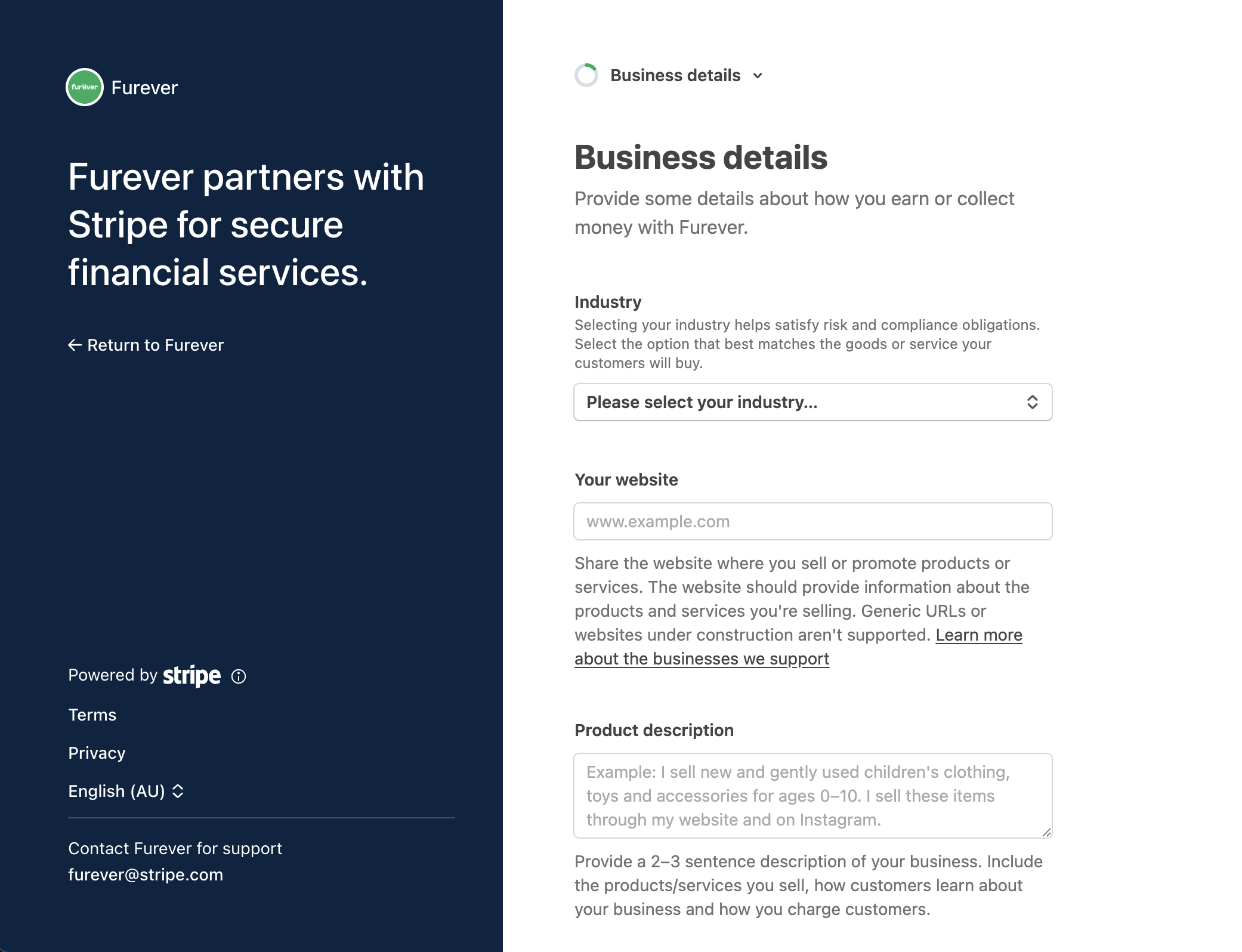
Stripe Connect hosted onboarding — fields are pre-filled from the platform integration; the user verifies and corrects rather than typing from scratch. stripe.com/connect/hosted-onboarding
Why it's best-in-class
Stripe earned a reputation for the lowest-friction merchant onboarding in fintech specifically because they invert the default contract. Most onboarding makes the user prove they exist. Stripe's posture is the opposite — we already know who you are; tell us where we're wrong. The cognitive load drops by an order of magnitude because verifying a pre-filled value is a different mental task than recalling and typing one.
The pattern
If the system has access to any identity-resolved priors — last year's data, an integration with a partner product, a third-party signal — the opening screen should display those values in a confirmable form. Three confirmations is faster, calmer, and higher-converting than three text fields, even when the underlying data is identical.
Pattern 02
Replit Agent 3
Streaming thought log — show your work
Don't render the recommendation in a single jump. Stream the system's reasoning as live status text — observed → inferred → decided. Each line ticks as it completes; the result lands after.
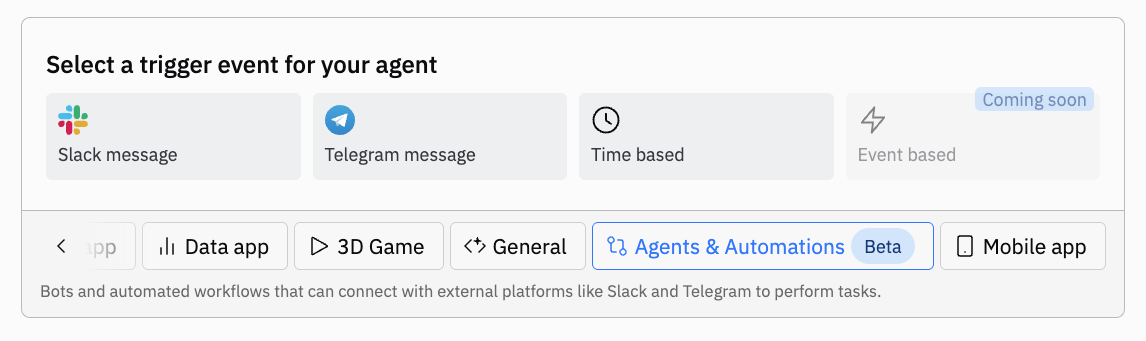
Replit Agent 3 — the agent narrates each step of its work in a visible activity panel, converting "wait, what is this thing doing?" into trust. blog.replit.com/introducing-agent-3
Why it's best-in-class
The Replit Agent panel is one of the most-quoted UX wins of 2025. The product feels safer than competing autonomous agents — not because it makes fewer mistakes, but because users can see what it's doing in real time. Cursor's multi-agent panels followed the same logic. The shared observation: when a system makes consequential decisions for a user, latency is not the problem — opacity is. Five seconds of visible reasoning beats two seconds of silence followed by a result.
The pattern
For any high-stakes recommendation (financial, medical, legal, anything irreversible), insert a 4–6 second streaming "thought log" between the user's last input and the recommendation. Each line should be in plain language and reference a concrete signal ("Reading your prior data… spotted X… checking Y"). The reveal is what makes opaque automation feel like trustworthy reasoning.
Pattern 03
Duolingo
Two-question wow placement test
Hard cap explicit intake at one or two single-tap chip clusters — never typing. The recommendation visibly tunes as each chip is tapped, so the user sees the system reacting to them in real time.

Duolingo — placement and goal-setting use single-tap chips with no typing; the system tunes the curriculum the moment a chip is tapped. goodux.appcues.com on Duolingo onboarding
Why it's best-in-class
Duolingo's onboarding is the most-cited example of "show value before signup" in the consumer literature. The placement test is a gentle 2–3 question diagnostic that visibly tunes the experience — the user can feel the product responding to them before they've created an account. Activation lifts are well-documented in their public case studies (and copied widely by Headspace, Calm, Strava).
The pattern
If a flow can't be fully driven by inferred signals, the next-best move is a tiny, tappable diagnostic — never more than three chip clusters, no typing. The recommendation should morph visibly with each tap, so the user understands the cause-and-effect. Long intake forms feel like a tax; this feels like the product paying attention.
Pattern 04
Superhuman
Concierge framing & reverse trial
Bundle the human (or premium tier) into onboarding by default — not as an upsell. Charge nothing until the user commits; let them downgrade to free rather than upgrade.
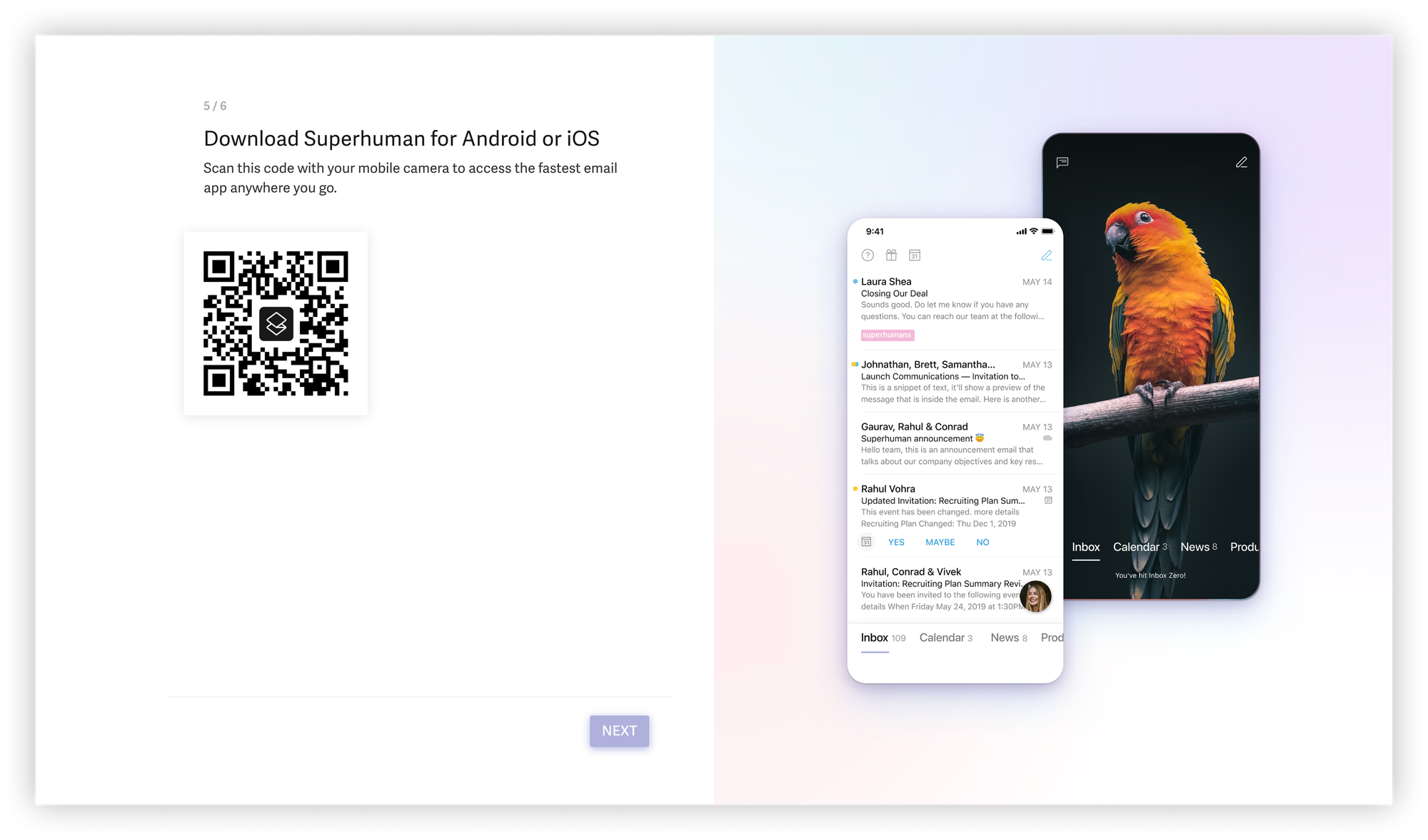
Superhuman — onboarding is bundled with a 30-min 1:1 setup call with a real person; the call is the product, not a feature. First Round Review on Superhuman's onboarding playbook
Why it's best-in-class
Superhuman built a $30/month email client against free competitors largely on the back of the concierge model. The 30-minute white-glove call did two jobs at once: it taught the keyboard shortcuts faster than any tutorial could, and it framed the human as part of the product, not a support escalation path. Reverse trials — free premium access first, downgrade later — show measurable activation lift in fintech (Robinhood, Wealthfront), AI (Notion AI), and productivity (Databox) studies.
The pattern
If a service tier includes a person, an expert, or a higher-touch experience, frame it as matched and included by default. Pair it with reverse-trial pricing — show the price ceiling up front, charge zero until commitment. This neutralizes the two largest objections to premium tiers in one move: sticker shock and lock-in fear.
Pattern 05
Spotify Wrapped
Story-format reveal of personal data
Don't present aggregated personal data as a dashboard. Present it as a paced, tappable story — emotional, surprising, shareable. Turn dry data into narrative.

Spotify Wrapped 2024 — your annual listening data is structured as a narrative arc with paced reveals, emotional resonance, and shareable moments. newsroom.spotify.com on Wrapped 2024
Why it's best-in-class
Wrapped is the most successful annual marketing event in consumer software, full stop. The genius is structural: the same data could be a dashboard, but presented as a paced story it generates billions of social impressions every December. The moves transferable beyond music: each beat lives in its own card, the sequence is choreographed, the user taps to reveal — agency replaces consumption — and the climax is personalized.
The pattern
Whenever a system needs to present a meaningful collection of personalized data — a year-in-review, a pre-filled summary, a recommendation with multiple data points behind it — the dashboard layout is rarely the strongest format. A paced reveal (one card per beat, optionally with typing indicators or transitions between them) converts "look at all this data" into "here's a small story about you." Activation, completion, and emotional resonance all benefit.
Honorable mentions
A few more onboarding flows worth a closer look beyond the five above:
- Apple Quick Start — clones state from your old device and only asks about new biometrics/passwords. The whole onboarding is a delta UI.
- Linear web onboarding — opinionated empty states, one input per step, persistent breadcrumb of what's been completed. Speed feels like a feature.
- Strava Athlete Intelligence (beta) — auto-imports activity history without an interview, then pairs every insight with plain-English reasoning.
- Wealthfront — "build a financial plan for free" path lets users see the product's full output before any deposit; activation gate sits after value, not before.
- Calm / Headspace — emotional check-in upfront ("how are you feeling?") that immediately re-skins the home screen content. Same primitive Duolingo uses, applied to mood.
- Granola — pre-onboarding survey delivered async via the welcome email, so the first session opens with full context already loaded.